Gummy candies are popular products made from a variety of ingredients that contribute to their unique texture, taste, and appearance. The main chemical compounds found in gummy candies include:
Gelatin, derived from animal collagen, is the most commonly used gelling agent in the industry, providing a chewy texture. Alternatively, pectin is used in vegan products to create a similar texture. In addition to pectin, gellan gum also has the ability to withstand acidic environments.
Sucrose is the main sweetener in the formulation. However, fructose is also used due to its lower glycemic index. In addition, xylitol, erythritol, and maltitol are increasingly popular as low-calorie and diabetes-friendly alternatives. Substances such as polydextrose and oligosaccharides are also used as sugar substitutes.
Acidic substances are also used in the manufacture of gummy candies to enhance their flavor and maintain their stability. Citric acid is the preferred choice because it not only provides a refreshing sour taste but also helps with stability and pH control of the product. In addition, malic acid and acetic acid are also used in some formulations to provide a slight bitterness and increase shelf life.
Colours play an important role in attracting consumer attention. Natural colours, such as betacyanin extract, not only provide colour but also offer additional benefits such as antioxidant properties. Artificial colours are also used as alternatives to natural colours.
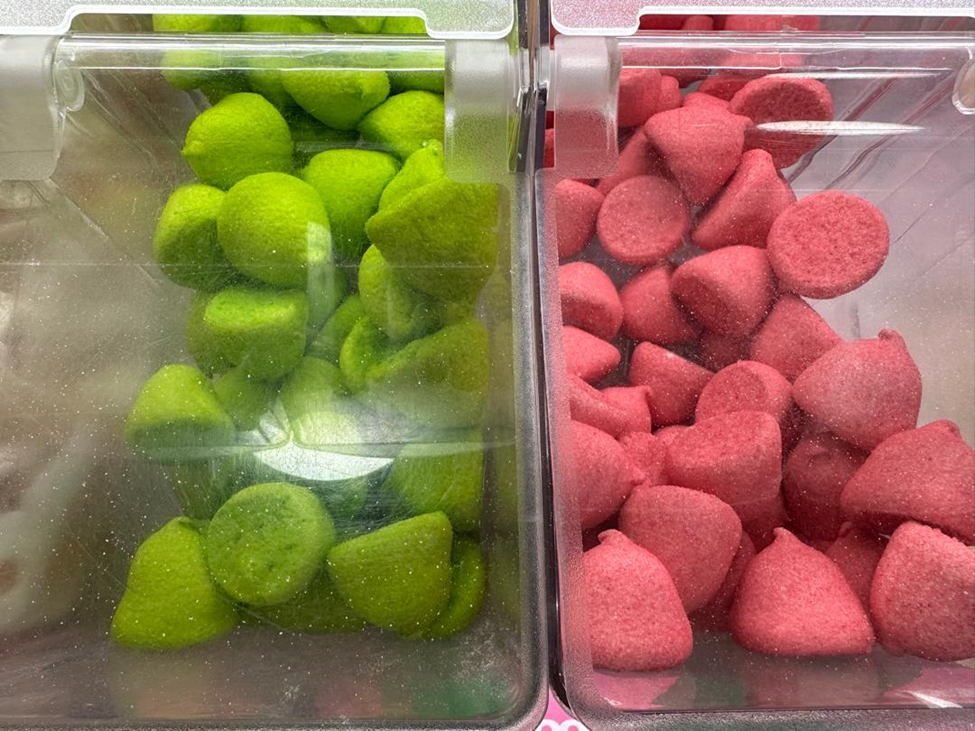
Various types of colors and textures of products sold on the market
Natural flavors, extracted from fruits, herbs, and other natural sources, are gaining attention because they enhance the sense of taste.
In addition to taste and texture, gummy candies are now formulated with additional ingredients. Antioxidants such as Spirulina and freeze-dried ingredients also contribute to health benefits. In addition, vitamins and minerals are often added to make them more nutritious.
In terms of formulation, water plays an important role in dissolving sugar and gelling agents, ensuring stability. To ensure product durability, preservatives such as sorbic acid are used to inhibit microbial growth and extend the shelf life of gummy candies.
Choking on Gummy Candy.
Choking on gummy candies is a concern, especially among children, due to the physical properties of the candies as well as the developmental characteristics of young children.
Gummy candies are typically classified at IDDSI Level RG7, meaning they do not easily break down into smaller particles. This can increase the risk of choking as the candy remains solid and sticky, potentially blocking the airways.
Foods, such as candy, are a leading cause of choking injuries and deaths in children. According to a 2013 study in the United States, hard candy and other types of candy were frequently associated with non-fatal choking incidents, with hard candy accounting for 15.5% and other candies for 12.8% of cases. The flexibility and elasticity of gummy candies can make them particularly dangerous because they can conform to the shape of the airway.
According to demographic studies in the medical field, children under the age of 3 are at the highest risk of choking due to narrower airways, immature teething, and poor chewing and swallowing abilities. Boys are more commonly affected than girls, and the majority of choking incidents occur in children under the age of 5.
Effective prevention strategies include parental education about choking hazards, proper food preparation (e.g., cutting food into smaller pieces), and supervision during meals. Public education and policy changes, such as improved food labeling and design, are also important in reducing choking accidents.
Dr Mohd Rashidi Abdull Manap AMRSC, FSSM is a faculty member at the Department of Chemistry, Universiti Putra Malaysia (UPM). In addition, he is a Visiting Research Fellow at Lund University, Sweden, based at BMC - Biomedicinskt Centrum.
Date of Input: 27/02/2025 | Updated: 11/03/2025 | m.hakim
MEDIA SHARING